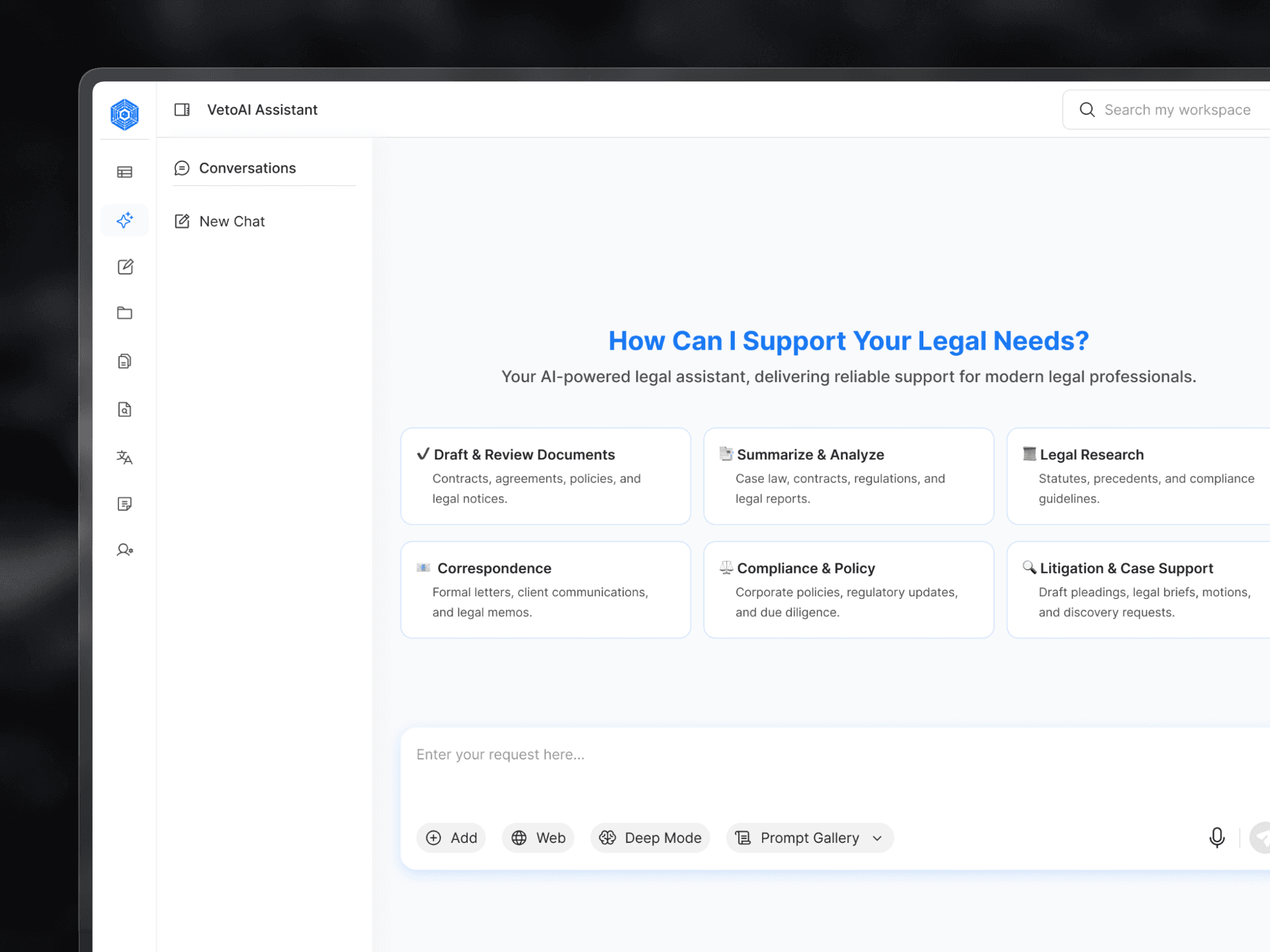
Legal Document Analysis
VetoAI Law Firm

Receiving an income tax notice can feel stressful—but in most cases, it’s not a penalty, it’s a request for clarification. With increasing digitization by the Income Tax Department of India and stricter compliance checks in 2026, notices are becoming more common for individuals, professionals, and businesses.
Whether you’re a salaried employee, CA, lawyer, or business owner dealing with compliance across High Courts, Supreme Court matters, or tax tribunals, knowing how to respond correctly is critical.
In this complete 2026 guide, we’ll break down:
Types of income tax notices in India
Step-by-step reply process
Common mistakes to avoid
Legal implications
How AI tools like VetoAI simplify compliance
Types of income tax notices in India
The Income Tax Department uses AI-driven systems to track discrepancies. Notices are usually sent for:
Mismatch in income reported vs AIS (Annual Information Statement)
High-value transactions (property, stock market, crypto)
TDS mismatch
Non-filing or delayed filing of ITR
Suspicious deductions or exemptions
With advanced data analytics, even minor inconsistencies can trigger automated notices.
Types of Income Tax Notices (India)
Understanding the type of notice is the first step before replying.
1. Section 139(9) – Defective Return Notice
Issued when your ITR has errors or incomplete details.
2. Section 143(1) – Intimation Notice
Sent after processing your return. It may indicate:
Refund due
Tax payable
No demand
3. Section 143(2) – Scrutiny Notice
A detailed review of your income and documents.
4. Section 148 – Income Escaping Assessment
Issued when income is suspected to be underreported.
5. Section 156 – Demand Notice
Sent when tax is payable.
Step-by-Step: How to Reply to Income Tax Notice (2026)
Step 1: Don’t Panic – Read Carefully
Check:
Section under which notice is issued
Assessment Year
Deadline to respond
Required documents
Missing deadlines can lead to penalties or escalation to legal proceedings.
Step 2: Login to Income Tax Portal
Visit: https://www.incometax.gov.in
Go to e-Proceedings
Select the relevant notice
Download the notice and attachments
Step 3: Gather Required Documents
Depending on the notice, collect:
ITR copy
Form 16 / 16A
Bank statements
Investment proofs
Property documents
Business invoices
For cases that may escalate to High Court or Supreme Court litigation, proper documentation becomes crucial.
Step 4: Draft a Proper Response
Your reply must be:
Clear and factual
Supported with evidence
Legally accurate
Structured professionally
A typical reply format:
Subject: Reply to Notice under Section [XYZ]
PAN: XXXXX
Assessment Year: XXXX
Respected Sir/Madam,
Reference to notice
Explanation of issue
Supporting documents list
Clarification statement
Yours sincerely
Step 5: Submit Online Response
Upload documents (PDF format)
Add explanation
Submit before deadline
Always keep acknowledgment receipts.
Step 6: Track Status
After submission:
Monitor portal updates
Respond to further queries
Be prepared for hearings if required
Common Mistakes to Avoid
Ignoring the notice
Submitting incomplete replies
Wrong interpretation of section
Missing deadlines
Uploading irrelevant documents
Copy-paste generic replies (very risky in scrutiny cases)
In serious cases, mistakes can escalate matters to Income Tax Appellate Tribunal (ITAT) or even constitutional courts.
Legal Impact: When It Goes Beyond Notices
If not handled correctly, income tax disputes can escalate to:
Commissioner Appeals
ITAT
High Court (for substantial questions of law)
Supreme Court of India
At higher levels, documentation, drafting precision, and legal reasoning become extremely important.
This is where professional-grade drafting tools and legal AI play a key role.
How VetoAI Helps You Reply to Income Tax Notices (2026)
In 2026, manual drafting is no longer enough—accuracy and speed matter.
VetoAI is an advanced AI-powered legal drafting platform designed for:
Lawyers
Chartered Accountants
Tax consultants
Legal teams
Key Benefits of Using VetoAI:
1. AI-Based Notice Reply Drafting
Generate precise replies tailored to specific sections like 143(1), 148, etc.
2. Court-Ready Documentation
Drafts aligned with formats used in:
High Courts
Supreme Court
Tax tribunals
3. Error Reduction
Avoid costly mistakes in:
Legal language
Compliance structure
Document formatting
4. Faster Turnaround
Prepare responses in minutes instead of hours.
5. Compliance-Focused AI
Built for Indian legal and tax ecosystem.
Example: Manual vs VetoAI Draft
Manual Draft Issues:
Generic wording
Missing legal references
Incomplete explanation
With VetoAI:
Section-specific response
Structured argument
Supporting evidence mapping
Professional tone
This drastically improves acceptance chances.
Best Practices -
Respond within deadline
Use section-specific language
Attach clear supporting documents
Keep response concise but complete
Consult CA/lawyer for complex cases
Use AI tools like VetoAI for accuracy
Real Scenario Example
Case: Salaried Individual – AIS Mismatch
Notice under Section 143(1)
Income mismatch due to stock trades
Solution:
Submit broker statement
Explain capital gains
Revised computation
Using VetoAI, the response included:
Correct legal language
Section reference
Structured explanation
Result: Issue resolved without escalation.
When Should You Hire a Professional?
Consider a CA or tax lawyer if:
Notice under Section 148
Large tax demand
Business or corporate case
Risk of litigation
Complex deductions or exemptions
Even professionals now rely on AI tools like VetoAI to improve efficiency.
Future of Tax Compliance in India (2026 & Beyond)
The future is:
AI-driven scrutiny
Real-time compliance tracking
Automated notices
Digital hearings
To keep up, professionals must combine:
Legal expertise
Technology (like VetoAI)
Final Thoughts
Replying to an income tax notice in 2026 is no longer just about compliance—it’s about precision, speed, and legal accuracy.
A well-drafted response can:
Resolve issues quickly
Avoid penalties
Prevent escalation to courts
A poor response can:
Trigger scrutiny
Lead to legal proceedings
Increase financial liability
That’s why tools like VetoAI are becoming essential for modern tax practice in India.
Use VetoAI to generate accurate, compliant, and court-ready replies in minutes.
Author :
Avika Grover
Innovator @VetoAI | Litigation & Dispute Resolution

Get started with legal AI
Ready to Work Smarter With Legal AI?